Four Sector Circular Flow Model

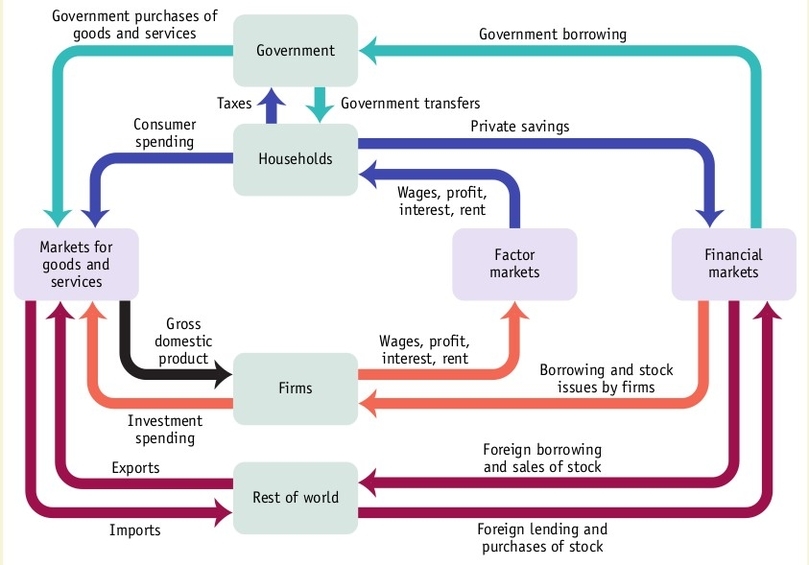
Four Sector Circular Flow Model: The four-sector circular flow model represents the economy, including households, businesses, government, and foreign sectors. It illustrates the flow of goods, services, and money between these sectors, highlighting the interdependence and economic activities within an open economy.

Four Sector Circular Flow Model

Cognitive Behavioral Therapy Model

Cognitive Behavioral Therapy Model: The Cognitive Behavioral Therapy (CBT) model is a psychological treatment approach that focuses on changing negative thought patterns and behaviors. CBT helps individuals identify and challenge distorted thinking, develop healthier coping mechanisms, and improve emotional regulation.

Cognitive Behavioral Therapy Model

Womens Size Conversion Chart

Womens Size Conversion Chart: A women’s size conversion chart helps shoppers translate sizes across different countries and regions, such as US, UK, EU, AUS, and Japan. For example, a US size 6 may correspond to a UK size 10 or EU size 38. The chart may also include bust, waist, and hip measurements for a more accurate fit. These charts are particularly helpful for online shoppers or international travelers who need size compatibility across global brands.

Women's Size Conversion Chart

Women Clothing sizes

Women Clothing sizes: Women’s clothing sizes vary significantly across different regions and brands. Typically, sizes are categorized into small (S), medium (M), large (L), and extra-large (XL), with numerical sizes ranging from 0 to 20 or higher. Accurate measurements of bust, waist, and hips are essential to determine the correct size, as these dimensions can differ between manufacturers.

Women Clothing sizes

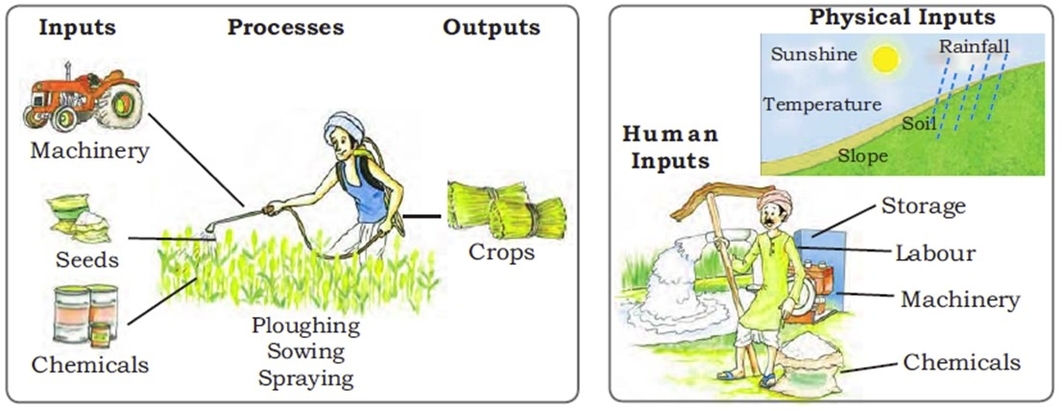
Class 6 Science Diagram

Class 6 Science is a subject that covers the basic concepts of natural and physical phenomena, such as food, plants, animals, materials, motion, light, electricity, magnets, air, water, and garbage. It is based on the NCERT curriculum and follows the CBSE guidelines for Class 6 students. The subject aims to develop scientific skills and knowledge among the students and prepare them for further studies in science.

The subject consists of 16 chapters, each with its own objectives, activities, exercises, and key points. The chapters are as follows:

– Chapter 1: Food – Where Does It Come From?
– Chapter 2: Components of Food
– Chapter 3: Fibre to Fabric
– Chapter 4: Sorting Materials into Groups
– Chapter 5: Separation of Substances
– Chapter 6: Changes Around Us
– Chapter 7: Getting to Know Plants
– Chapter 8: Body Movements
– Chapter 9: The Living Organisms and Their Surroundings
– Chapter 10: Motion and Measurement of Distances
– Chapter 11: Light, Shadows and Reflection
– Chapter 12: Electricity and Circuits
– Chapter 13: Fun with Magnets
– Chapter 14: Water
– Chapter 15: Air Around Us
– Chapter 16: Garbage In, Garbage Out
ome of the main topics that are covered in Class 6 Science are:

– The sources and components of food and their importance for health and nutrition
– The types and properties of different materials and how they can be sorted, separated, and changed
– The structure and functions of different plants and their parts
– The types and features of different animals and their body movements
– The characteristics and habitats of living organisms and their adaptation to the environment
– The concepts and units of motion and measurement and the tools and methods used for measuring distances
– The nature and behavior of light and how it forms shadows and reflections
– The basic principles and applications of electricity and circuits
– The properties and uses of magnets and how they interact with each other and other materials
– The sources and properties of water and its importance for life and the environment
– The composition and quality of air and its effects on living and non-living things
– The types and sources of garbage and how it can be managed and reduced

To learn more about Class 6 Science, you can refer to the following resources:

– [NCERT Solutions for Class 6 Science](^1^) – This provides detailed solutions and explanations for each chapter and exercise in the NCERT textbook.
– [NCERT Books for Class 6 Science](^2^) – This provides the complete PDF of the NCERT textbook in English and Hindi, which

Class 6 Science Diagram

Relationship Of Biology With Other Sciences

Relationship Of Biology With Other Sciences: Biology intersects with other sciences like chemistry, physics, and environmental science. For example, biochemistry explores the chemical processes within living organisms, while biophysics applies physical principles to biological systems.

Relationship Of Biology With Other Sciences

Earth’s Layers

Earth is composed of four distinct layers: the inner core, the outer core, the mantle, and the crust . The inner core is a solid metal ball made mostly of iron and nickel, with a radius of 1,220 kilometers (758 miles) . It spins a bit faster than the rest of the planet and is intensely hot, with temperatures sizzling at 5,400° Celsius (9,800° Fahrenheit) . The outer core is also made from iron and nickel, but in liquid form. It is heated largely by the radioactive decay of the elements uranium and thorium, and churns in huge, turbulent currents that generate electrical currents, which in turn generate Earth’s magnetic field . The mantle is Earth’s thickest layer, at close to 3,000 kilometers (1,865 miles) thick, and is semi-solid . The crust is the outermost layer of Earth, and is the thinnest layer, ranging from 5 to 70 kilometers (3 to 44 miles) thick .

The Earth’s layers are formed, heated, and moved by various forces . The inner core is believed to be formed by the solidification of the outer core, while the outer core is believed to be formed by the cooling of the Earth’s original molten state . The mantle is heated by the residual heat from the Earth’s formation, as well as by the decay of radioactive isotopes . The crust is formed by the cooling of the Earth’s original molten state, and is broken into tectonic plates that move around the surface of the Earth .

The Earth’s layers have different physical and chemical properties, which affect how they behave and interact with each other . For example, the mantle is denser than the crust, and so the crust “floats” on top of the mantle . The different layers also have different temperatures and pressures, which affect the behavior of the materials within them .

In summary, the Earth is composed of four distinct layers: the inner core, the outer core, the mantle,

Earth's Layers

Cold War Flow Chart

The term “Cold War Flow” is not a commonly used phrase in the context of the Cold War. However, I can provide you with an overview of the Cold War and its major events.

The Cold War was a period of geopolitical tension between the United States and the Soviet Union and their respective allies, which lasted from the end of World War II in 1945 until the collapse of the Soviet Union in 1991. The term “cold” was used to describe the lack of direct military action between the two superpowers, although there were many proxy wars fought in various parts of the world.

The origins of the Cold War can be traced back to the end of World War II, when the uneasy wartime alliance between the United States and Great Britain on the one hand and the Soviet Union on the other began to unravel. By 1948, the Soviets had installed left-wing governments in the countries of Eastern Europe that had been liberated by the Red Army. The Americans and the British feared the permanent Soviet domination of Eastern Europe and the threat of Soviet-influenced communist parties coming to power in the democracies of Western Europe.

The Cold War was waged on political, economic, and propaganda fronts and had only limited recourse to weapons. The two superpowers engaged in an arms race, with each side developing more powerful nuclear weapons. The United States and the Soviet Union also engaged in a space race, with each side trying to outdo the other in space exploration and technology.

The Cold War was marked by several major events, including the Cuban Missile Crisis, the Berlin Crisis, and the Vietnam War. The Cuban Missile Crisis occurred in 1962 when the Soviet Union placed nuclear missiles in Cuba, which is just 90 miles from the United States. The United States responded with a naval blockade of Cuba, and the two superpowers came close to nuclear war.

The Berlin Crisis occurred in 1961 when the Soviet Union erected the Berlin Wall to prevent East Germans from fleeing to the West. The United States responded by airlifting

Cold War Flow Chart