World population projection 2100

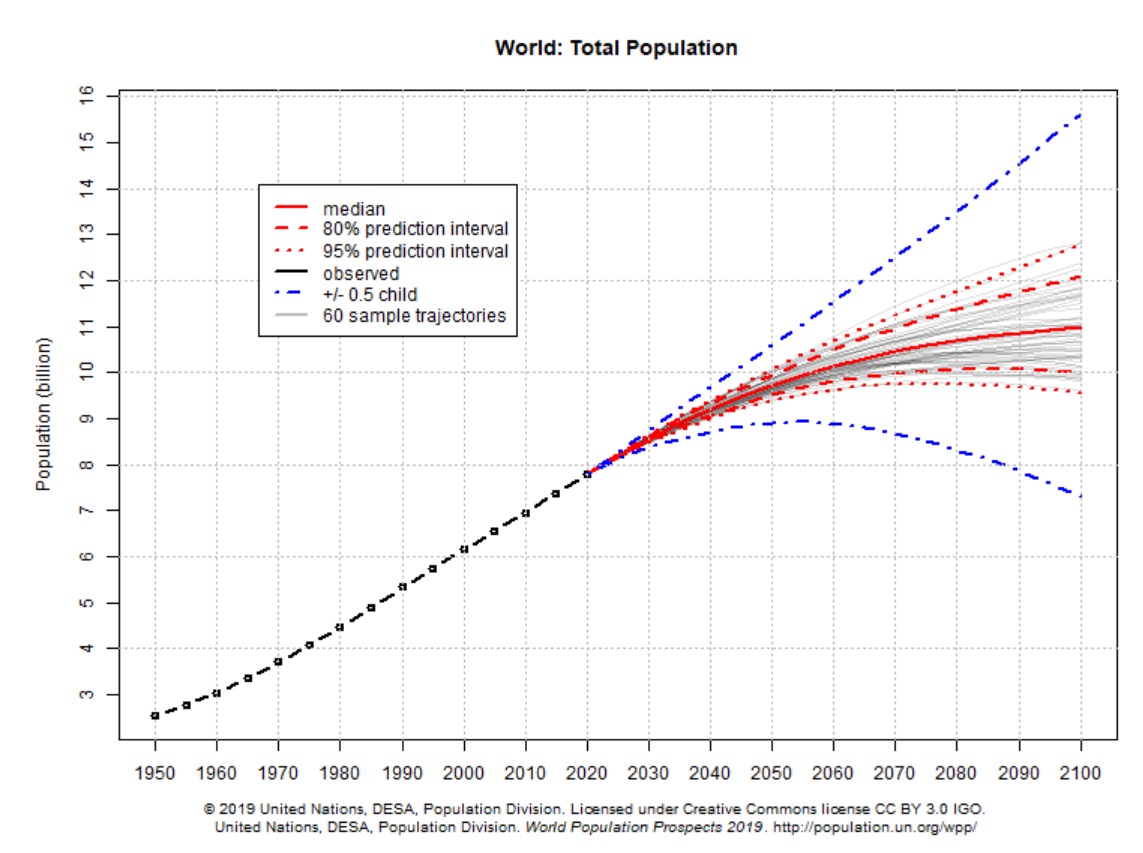
The world population projection for 2100 anticipates significant growth followed by stabilization or decline depending on regional fertility trends. While many regions will experience aging and population shrinkage, others, especially in Africa, are expected to see sustained growth. Technological, social, and environmental factors will heavily influence these projections.
World population projection 2100

Top 10 largest cities

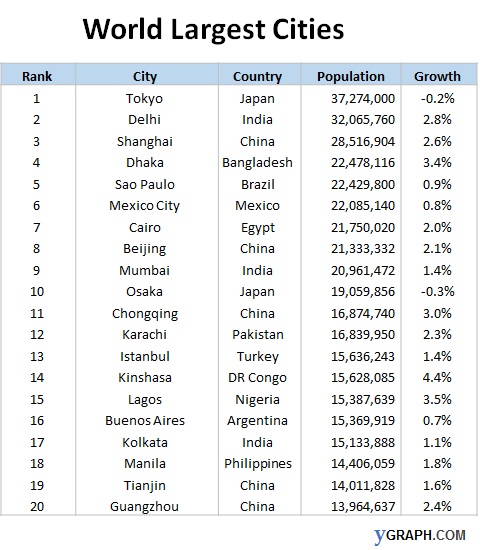
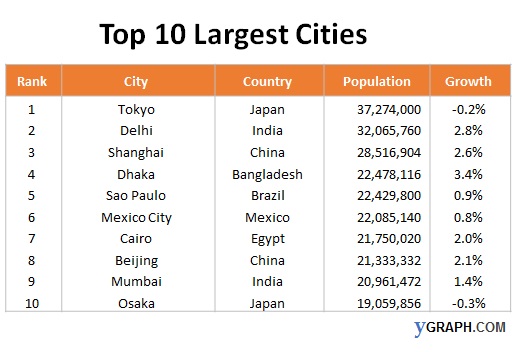
The top 10 largest cities globally, including Tokyo, Delhi, Shanghai, São Paulo, Mexico City, Cairo, Mumbai, Beijing, Dhaka, and Osaka, are vast urban centers with populations exceeding tens of millions. These megacities face immense challenges related to infrastructure, housing, environmental sustainability, and social services as they continue to grow.

top 10 largest cities

Europe population projection 2100

By 2100, Europe is expected to face population decline and significant aging. Many countries will have shrinking labor forces and growing dependency ratios, prompting shifts in immigration policies, pension systems, and healthcare infrastructure to address demographic imbalances.

Europe population projection 2100

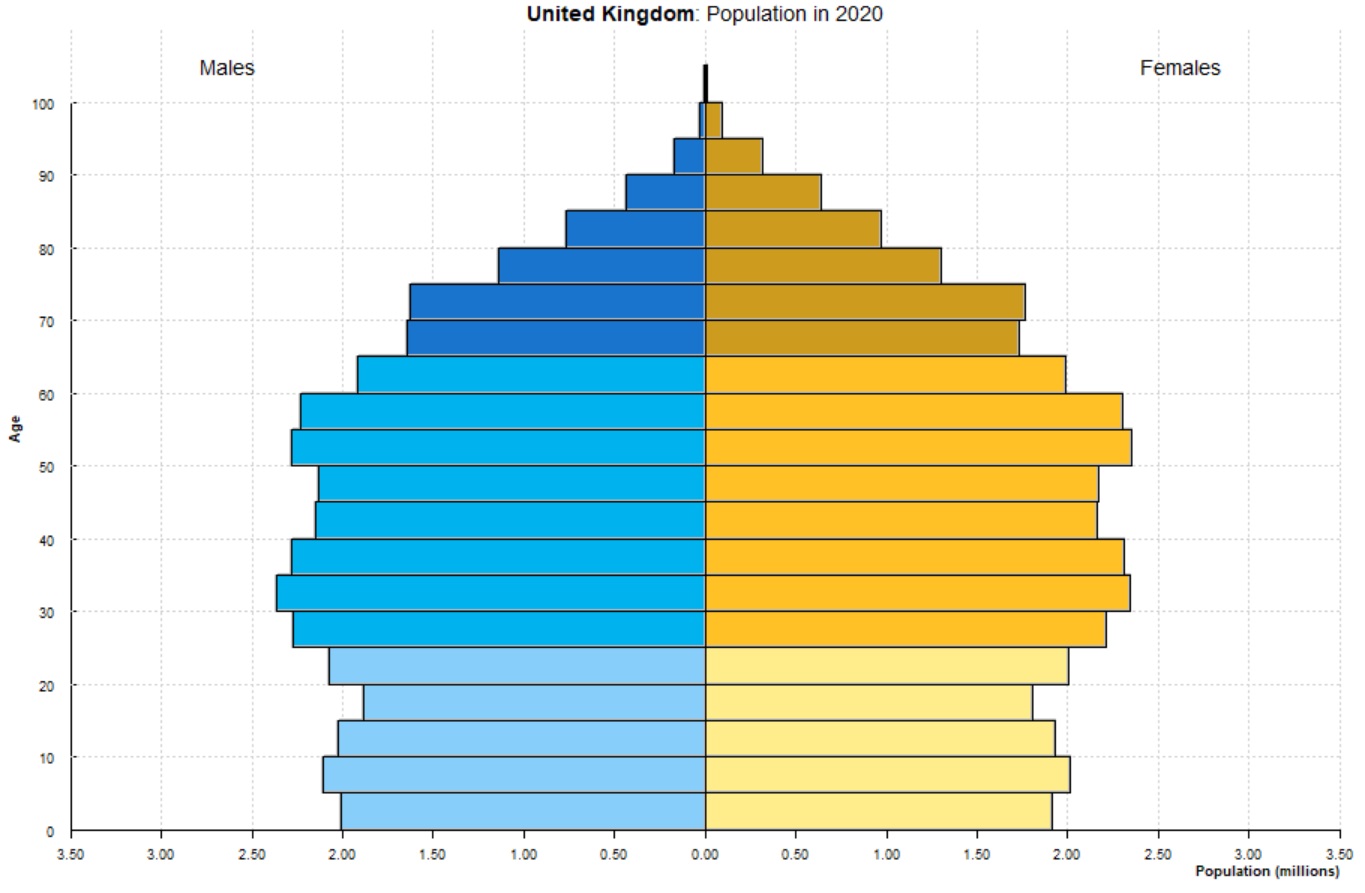
United Kingdom population pyramid

The population pyramid of the United Kingdom displays a classic aging society structure, with a narrowing base of younger age groups and an expanding proportion of older adults. This trend is driven by sustained low fertility rates and increased life expectancy. The demographic profile raises concerns about future labor force shortages and the strain on pension and healthcare systems.

United Kingdom population pyramid

Europe population pyramid

The population pyramid of Europe reveals a clear aging trend, with a large proportion of the population concentrated in older age brackets and a narrowing base of younger cohorts. This demographic structure reflects decades of low fertility rates and increased life expectancy. Many European countries are now focused on addressing the economic and social implications of an aging population.

Europe population pyramid

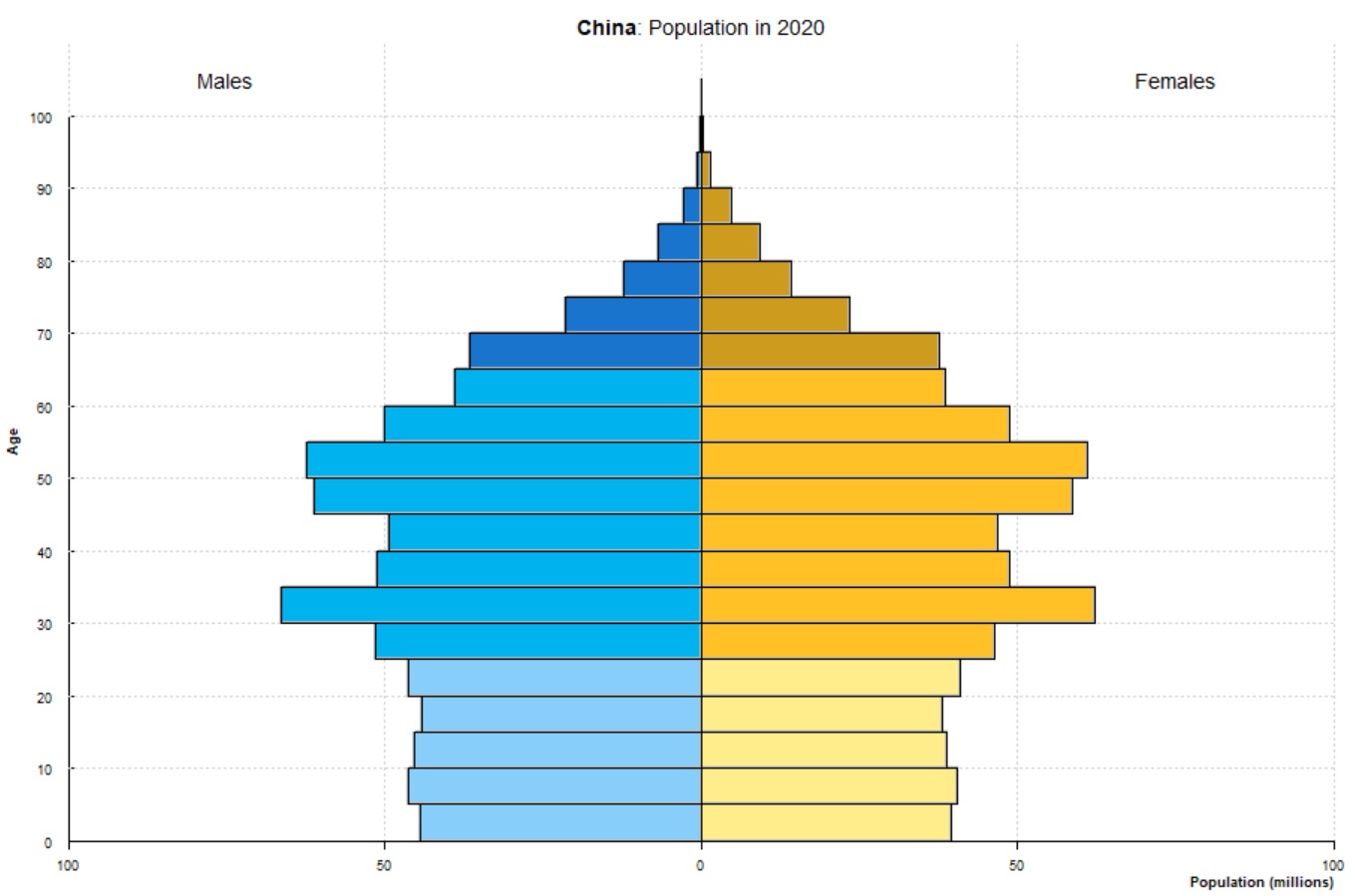
China population pyramid

China’s population pyramid shows a rapidly aging structure, with a shrinking base of young people and a bulging segment of middle-aged and older adults. This demographic profile results from decades of low fertility and improved longevity. The imbalance between working-age and dependent populations is expected to grow more pronounced in the future.

China population pyramid

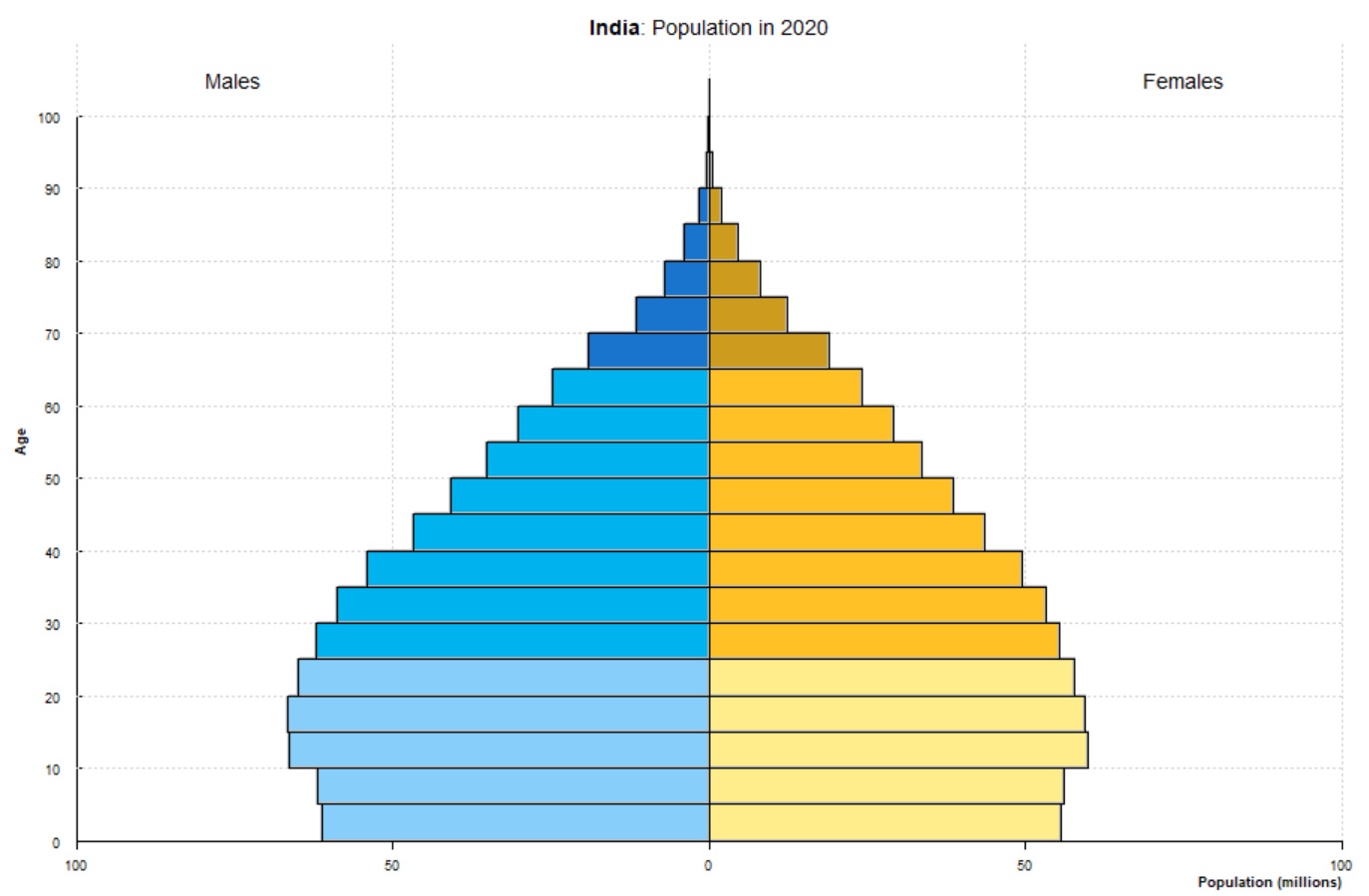
India population pyramid

India’s population pyramid is broad at the base, reflecting a large youth population, though fertility rates are declining. The structure shows a gradual demographic transition with longer life expectancy and a narrowing base as birth rates fall, indicating future aging and shifts in dependency ratios.

India population pyramid

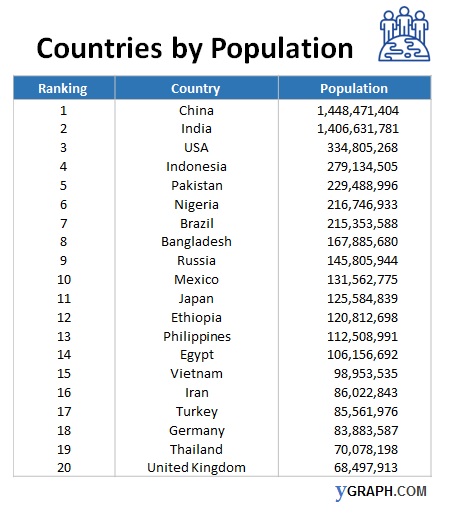
Countries by population

Countries by population vary widely, from those with billions of inhabitants to those with only a few thousand. Population size influences economic capacity, political influence, and social infrastructure needs. Demographic trends such as fertility rates, mortality, and migration differ significantly across countries, shaping global development patterns and geopolitical dynamics.

Countries by population

Largest countries by population

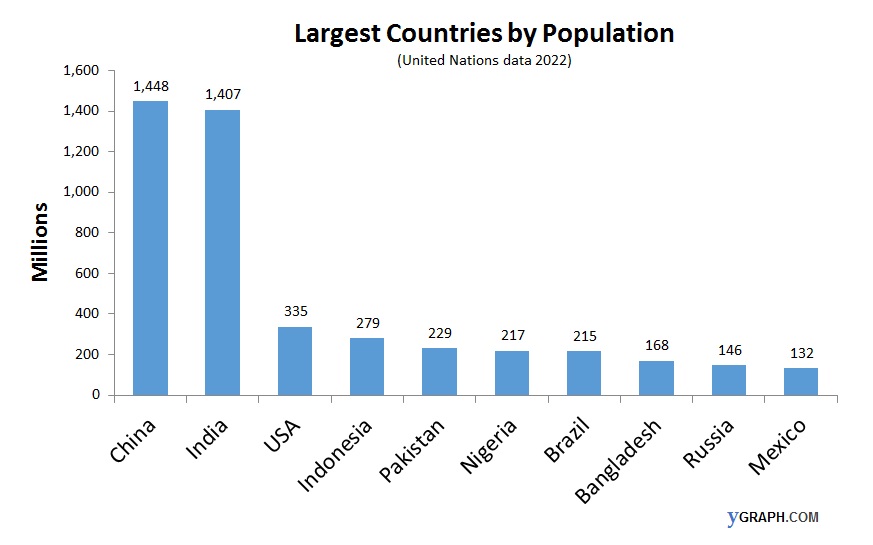
The largest countries by population, including China, India, and the United States, have vastly different demographic profiles. Some face aging populations and declining fertility, while others experience rapid growth and youthful age structures. Urbanization, migration, and economic development drive changing population dynamics worldwide, influencing global economic and social trends.

Largest countries by population