Data science

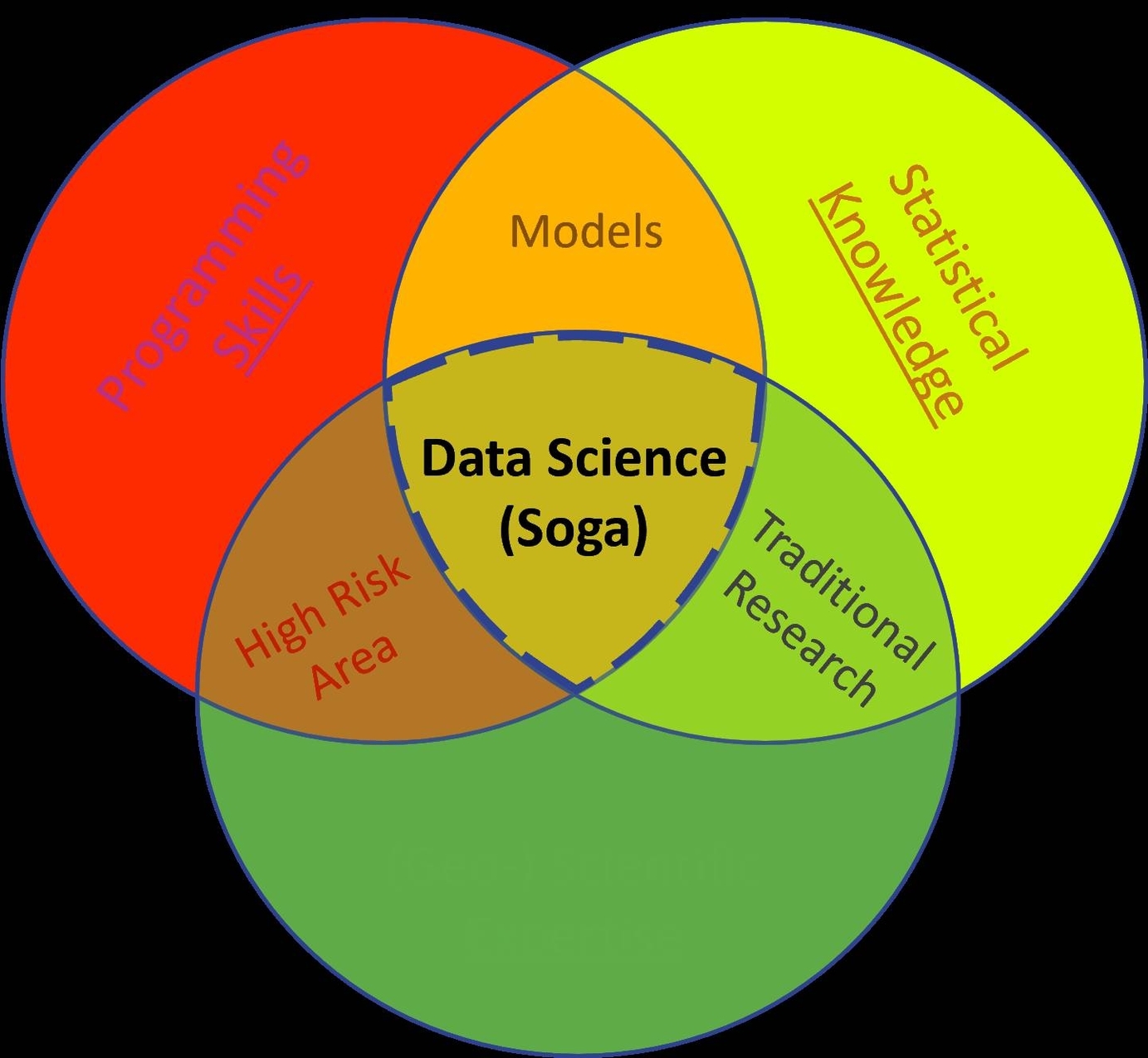
Data Science: Data science involves extracting knowledge and insights from structured and unstructured data using techniques from statistics, machine learning, and computer science. It encompasses data collection, cleaning, analysis, and visualization to inform decision-making and solve complex problems.

Data science

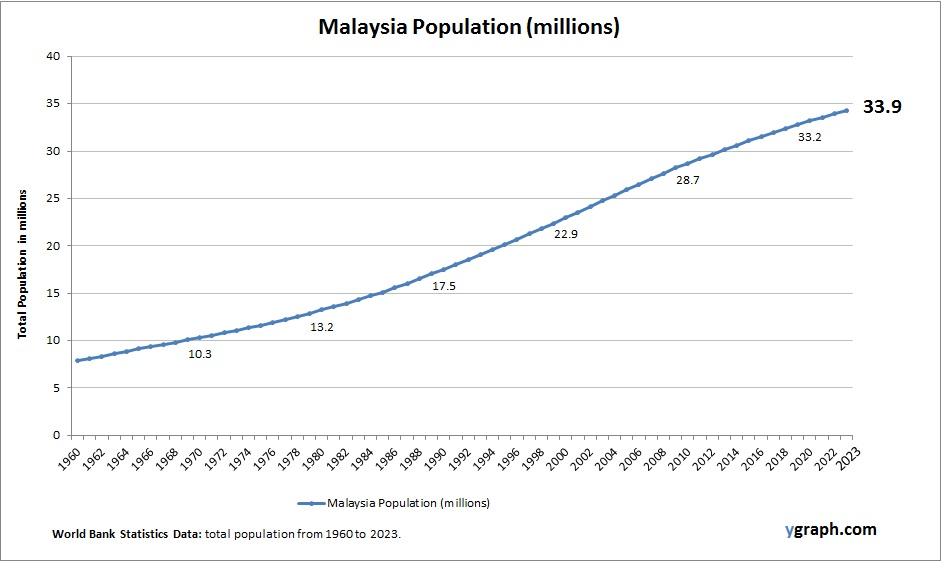
Malaysia Population

Chart above demonstrates Malaysia Population. This is according to World Bank total population stats. Latest population information for Malaysia.

Malaysia has a large and diverse population, with fertility rates gradually declining as the country continues to urbanize. Immigration, especially from neighboring countries, plays a role in shaping demographic trends alongside a growing middle class and shifting societal norms.

Malaysia Population

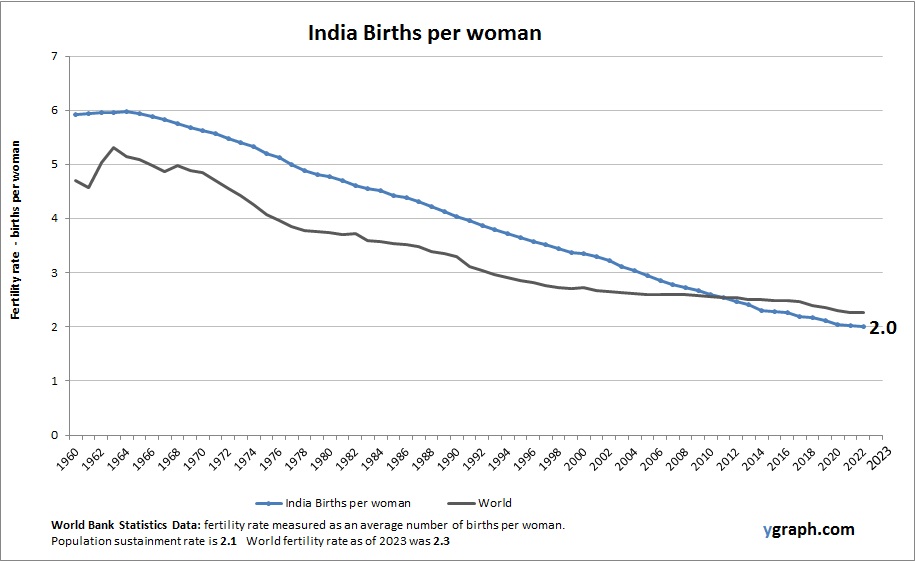
India Births per woman

Chart above demonstrates India Births per woman. The fertility rate statistics are compiled by World Bank. Latest births per woman information for India.

India’s fertility rate has been steadily declining due to widespread improvements in education, healthcare access, and family planning. Regional disparities exist, with rural and less developed areas maintaining higher birth rates. Urbanization and economic growth contribute to changing social norms around family size, shaping a demographic transition toward smaller families over time.

India Births per woman

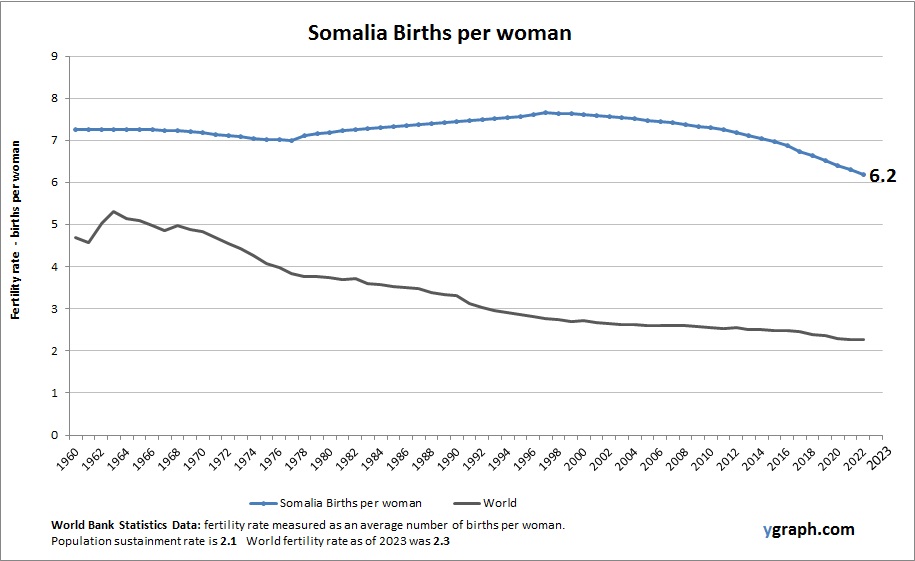
Somalia Births per woman

Chart above demonstrates Somalia Births per woman. The fertility rate statistics are compiled by World Bank. Based on the latest available information for Somalia.

Somalia has very high fertility rates, among the highest globally, driven by cultural traditions and limited access to family planning. Population growth is rapid despite ongoing political instability and conflict. A young demographic profile shapes social and economic needs, with efforts focusing on improving healthcare and education access.

Somalia Births per woman

Niger Population

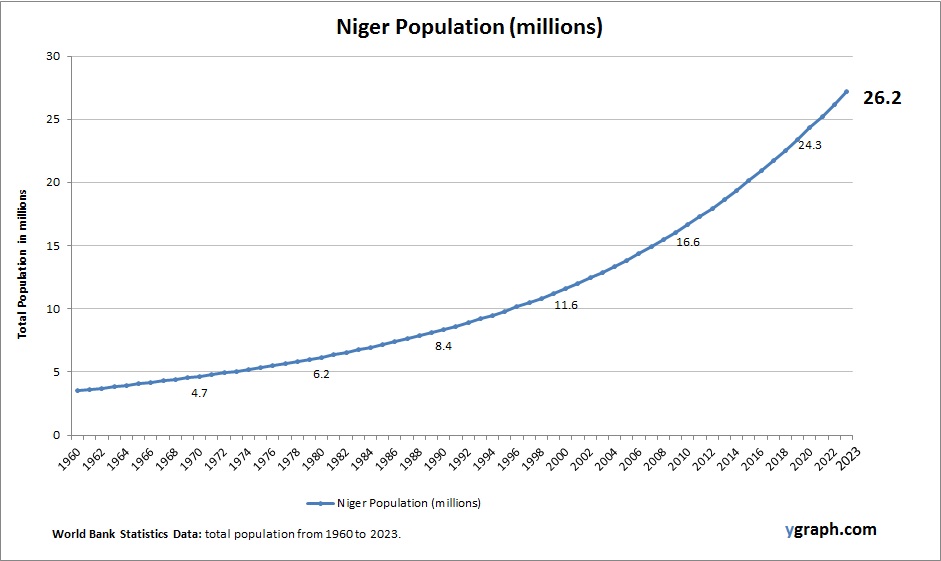
This diagram presents Niger Population. The country statistics are compiled by World Bank. Based on the latest demographics info provided for Niger.

Niger has one of the highest population growth rates in the world, driven by extremely high fertility rates and a predominantly youthful population. Limited access to family planning, cultural norms, and economic factors sustain rapid demographic expansion, creating significant development challenges.

Niger Population

St. Martin (French part) Population

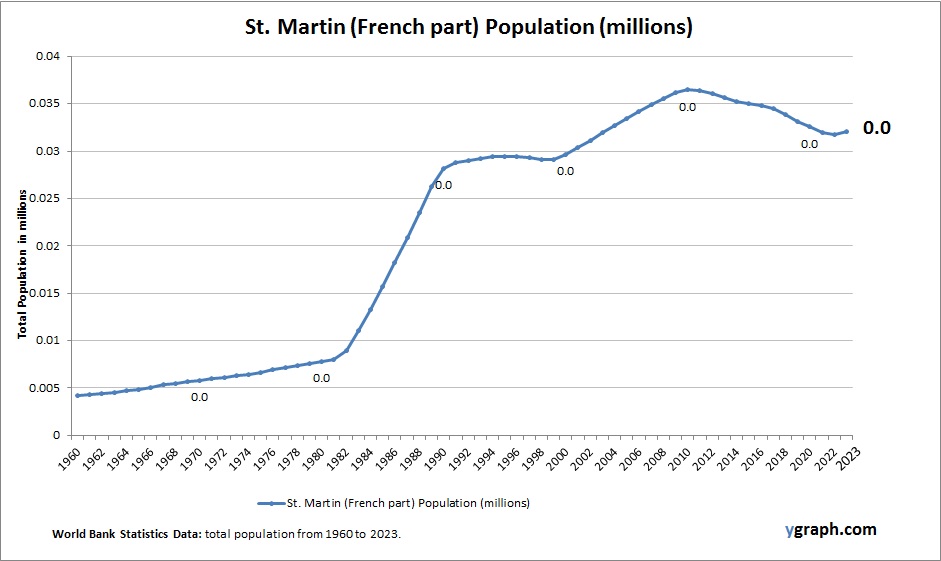
This diagram presents St. Martin (French part) Population. This is according to World Bank total population stats. Based on the latest demographics info provided for St. Martin (French part).

St. Martin’s French side has a small, diverse population primarily supported by tourism and related services. Population growth is slow, influenced by economic factors, natural disasters, and migration flows. The island’s limited land area and reliance on the hospitality industry shape demographic trends, with efforts to improve infrastructure and social services ongoing.

St. Martin (French part) Population

Zimbabwe Population

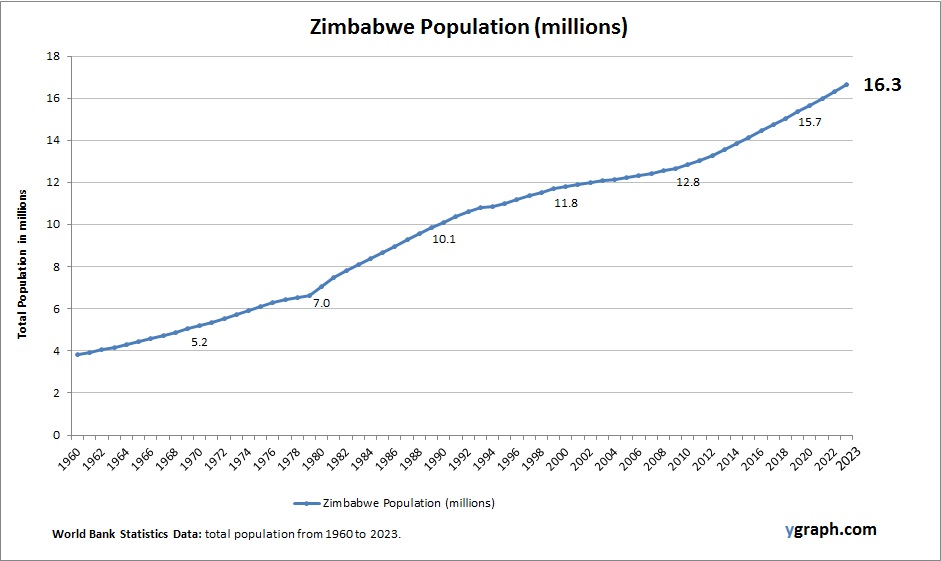
Chart above demonstrates Zimbabwe Population. World Bank is the source of this population data. Based on the latest demographics info provided for Zimbabwe.

Zimbabwe’s population is young and growing moderately, though economic challenges and migration impact demographic dynamics. Fertility rates are declining, supported by improved healthcare and education access. Urbanization is increasing, but rural areas still host the majority of the population.

Zimbabwe Population

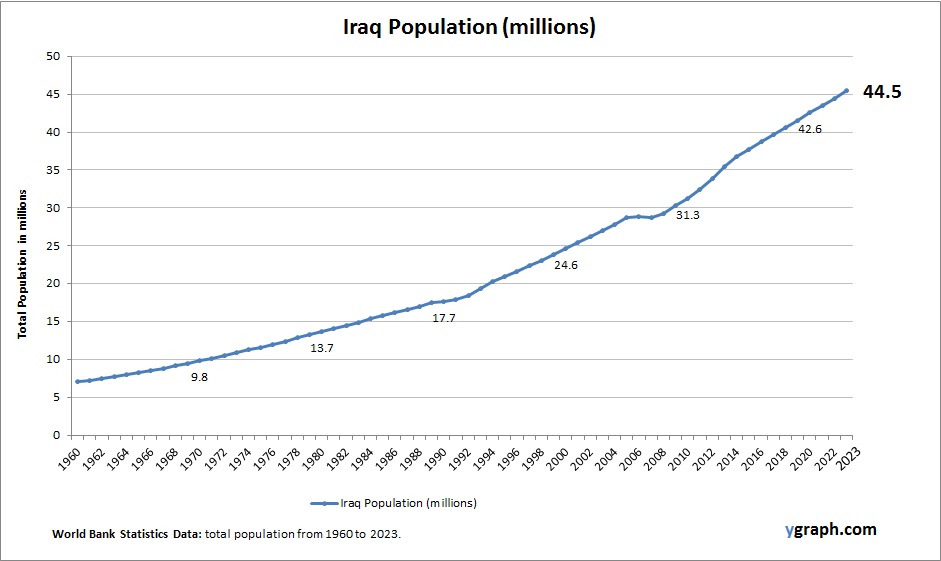
Iraq Population

Chart above demonstrates Iraq Population. World Bank is the source of this population data. Latest population information for Iraq.

Iraq’s population has experienced steady growth over recent decades, driven largely by high fertility rates and a relatively young population. Urbanization continues to rise, particularly in cities like Baghdad, Basra, and Mosul, where job opportunities and services attract internal migration. Although past conflicts and instability affected demographic patterns, recent improvements in infrastructure and education are influencing migration trends and health outcomes, helping shape a more dynamic population structure.

Iraq Population